
Choosing outsourced dental insurance verification is a workflow decision, not simply a price comparison. A practice needs clear benefit information before the appointment, a usable record in its practice management system (PMS), and a dependable way to handle missing or conflicting answers.
This guide helps dental practice owners, office managers and DSO operations teams compare providers. For the clinical-office verification workflow itself, use CEC’s dental insurance verification checklist.
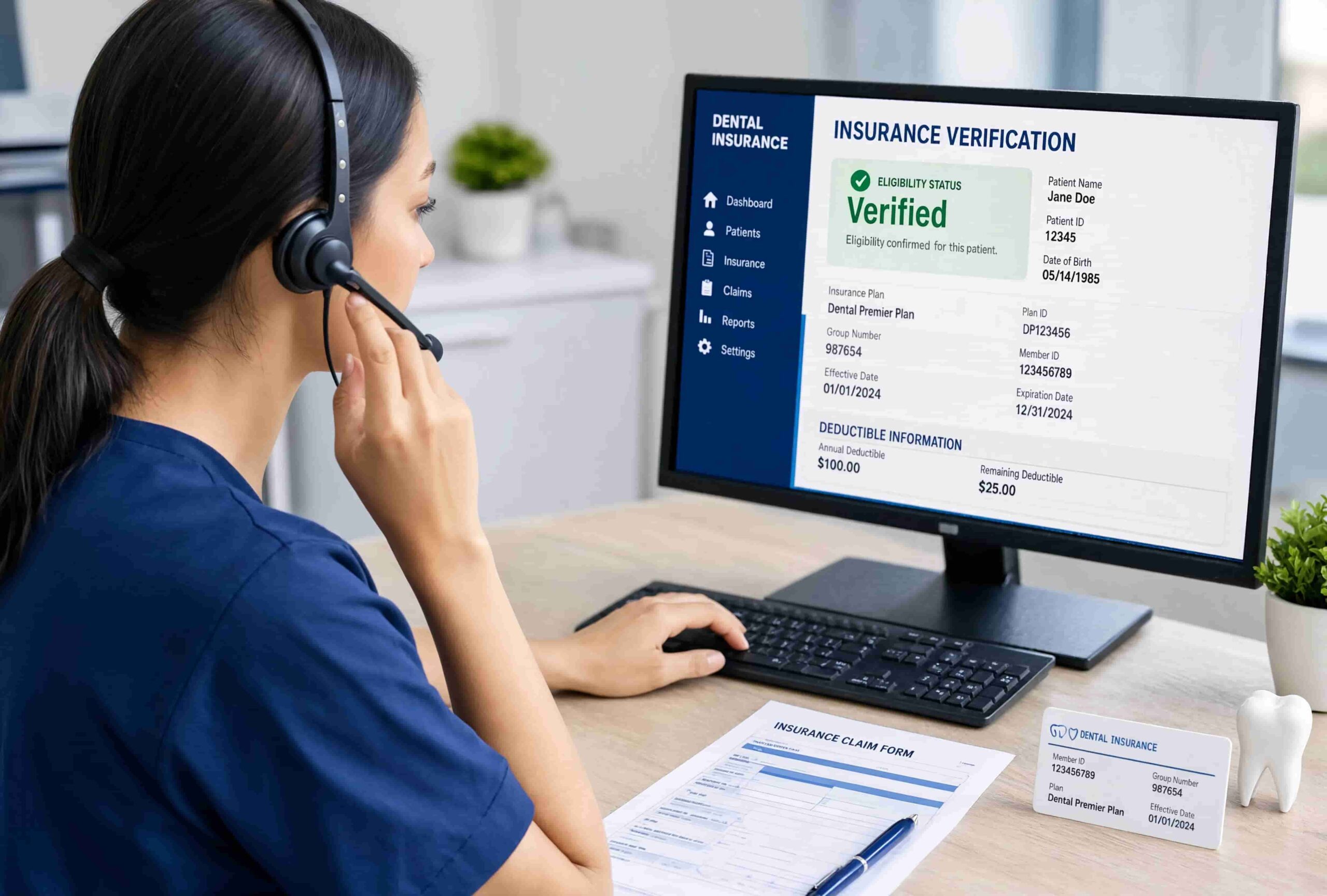
What should dental insurance verification services include?
Confirm the scope in writing. An active-plan check and a procedure-specific benefit breakdown are different deliverables. Ask which details are checked, which sources are used, where the findings are recorded and how unresolved items reach your team.
A useful scope can cover eligibility, plan dates, deductibles, remaining benefits, relevant limitations, network information and authorization requirements. The exact information available depends on the payer and plan. A blank field should be marked as unresolved rather than treated as confirmed coverage.
8 questions to ask a dental verification company
1. What is included in each verification?
Request an anonymized sample deliverable. Check whether it separates confirmed benefits, estimates and unanswered questions. Discuss procedure-specific needs, treatment history, frequency limits, waiting periods, missing-tooth provisions and coordination of benefits when relevant to your schedule. Avoid assuming every payer supplies every detail.
2. What happens when the portal answer is incomplete?
Ask when the team uses another payer source or calls for clarification. Define who handles a payer outage, conflicting plan information or a question that remains unanswered. Your office should receive a clear exception note, an owner and a next step—not an apparently complete verification with missing information.
3. Where will the benefit breakdown appear in our PMS?
Confirm the workflow for your specific PMS, locations and provider setup. Agree where plan notes, supporting records and unresolved questions belong. Ask whether work is entered directly or delivered for your staff to import. Have your front desk review the sample for readability before approving the format.
4. How are appointment deadlines and same-day additions handled?
Define the schedule handoff, completion deadline, operating hours and escalation contact. Discuss new patients, rescheduled visits, late insurance changes and urgent additions separately. A turnaround commitment should reflect your actual schedule and payer availability; one headline promise may not cover every exception.
5. How do you document the source and date of a verification?
Ask for a consistent record of when information was checked and the payer source or reference available. The American Dental Association’s eligibility guidance highlights date-of-service verification and documentation of payer interactions. It also explains that payer eligibility information can be affected by delayed or retroactive changes.
6. How will access, quality review and corrections work?
Review the access method, approved users, confidentiality arrangements and removal of access when staff change. Agree on a quality-review sample and correction process. Before sharing patient information, have the appropriate privacy and security arrangements reviewed. A sales enquiry should contain business details, not patient records or payer passwords.
7. How are pricing and extra work defined?
Clarify the pricing unit: patient, verification, provider, location or agreed staffing scope. Ask about minimum volumes, rechecks, secondary plans, difficult payer calls, urgent requests and setup work. Compare the total cost of the agreed deliverable, including any office work that remains after the vendor finishes.
8. What will we measure during the initial review?
Agree on a small operational scorecard before launch. Suggested measures are completion before the agreed deadline, unresolved items at appointment time, sampled documentation completeness, corrections and repeated eligibility-related billing issues. Set definitions and a starting baseline together. These are proposed review measures, not universal benchmarks or promised results.
Verification software or an outsourced verification team?
Software can help retrieve available information; an outsourced service should have a defined responsibility for reviewing it, resolving exceptions and completing the agreed handoff. Ask what work stays with your office in either model. Compare both options against your payer mix, staffing capacity, documentation needs and schedule.
Explore CEC’s dental insurance verification services to discuss an operating scope for your practice.
Keep verification, credentialing and claims follow-up distinct
Patient benefit verification, provider credentialing and unpaid-claim follow-up address different parts of the revenue cycle. Confirm which services are included in a proposal. If your main problem is a growing backlog of unpaid claims, discuss A/R follow-up alongside verification rather than expecting a coverage check to resolve that backlog.
Verification and preauthorization do not guarantee claim payment. The ADA’s preauthorization guidance explains why a later change in eligibility or available benefits can affect payment. Final outcomes depend on the applicable plan, claim and payer review.
Discuss your verification workflow with CEC
Tell us your practice size, PMS, monthly appointment volume and the verification work your office needs help completing. CEC can discuss a scope covering verification or broader dental revenue cycle management, based on your requirements.
Request your complimentary billing and RCM assessment
Prefer to start with your own numbers? Try the free Dental RCM HealthCheck Calculator for an indicative operational assessment. Its modeled estimates are not guaranteed collections.
Find the revenue gaps costing your practice money
Request a complimentary dental revenue review. Our team will identify opportunities across verification, claims, denials, payment posting and A/R follow-up.
Request My Free Revenue ReviewNo obligation. Built for independent practices, groups and DSOs.